

Tea, a beloved beverage worldwide, begins its journey from the humble leaves of the Camellia sinensis plant. Despite originating from the same plant, the diversity in tea types—black, green, and white—stems from the unique processes each undergoes. Let’s dive into the fascinating journey these leaves take to become the teas we savour daily.
Black Tea: The Bold and Robust
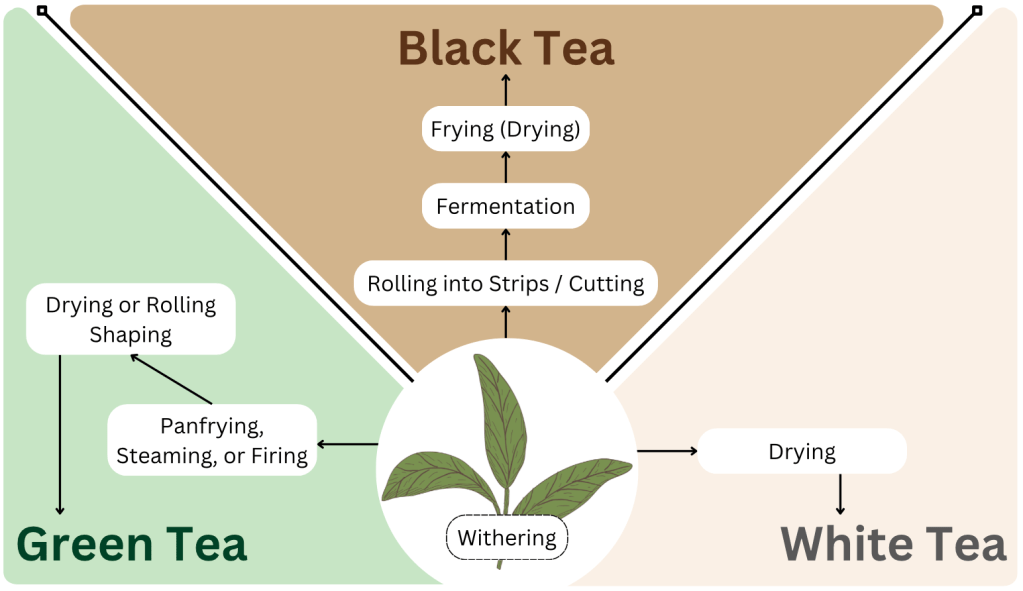
Black tea, known for its strong flavour and dark colour, undergoes the most processing among the three types. The process begins with plucking, where young tea leaves and buds are carefully harvested. The next step is withering, where leaves are spread out and left to wilt, losing moisture and becoming soft and pliable.
After withering, the leaves move on to rolling. This critical stage involves twisting and breaking the leaves to release essential oils, which contribute to black tea’s distinct aroma and flavor. Traditionally, this was done by hand, but modern methods often use machines.
The most defining step for black tea is oxidation. Rolled leaves are left to rest in a controlled environment, allowing enzymes in the leaves to react with oxygen. This process turns the leaves dark brown or black and intensifies the flavor. Finally, the leaves are fired or dried to halt oxidation and reduce moisture content, making them ready for sorting, grading, and packaging.
Green Tea: The Fresh and Delicate
Green tea’s hallmark is its fresh, grassy flavor, achieved by minimal oxidation. Like black tea, the process starts with plucking. To prevent oxidation, green tea leaves undergo quick steaming or pan-firing soon after harvesting. This step is crucial as it deactivates the enzymes responsible for oxidation, preserving the leaves’ green colour and fresh flavour.
Following the heat application, the leaves are rolled. Unlike black tea, the rolling here is gentle, aiming to shape the leaves rather than break them. Finally, the leaves are dried to remove any remaining moisture. This drying process locks in the tea’s vibrant green colour and fresh taste. The final product is a delicate, fragrant tea that offers a lighter, more vegetal flavour profile.
White Tea: The Pure and Subtle
White tea is the least processed of all, known for its subtle flavour and delicate aroma. The journey begins with plucking the youngest buds and leaves, often covered in fine white hairs, which give the tea its name. These tender leaves undergo minimal processing to retain their natural character.
The leaves are then subjected to a gentle withering process. They are spread out and allowed to dry slowly in natural sunlight or controlled indoor conditions. This step is crucial as it withers the leaves while avoiding oxidation. Since white tea does not undergo rolling or firing, it retains the highest amount of natural antioxidants and polyphenols.
The Art and Science of Tea Production
The transformation of Camellia sinensis leaves into black, green, and white tea is both a nuanced art and a precise science. Each step in the process is meticulously controlled to bring out the best characteristics in the final product. Environmental factors, known collectively as terroir, significantly impact the flavour and quality of the tea. These factors include the soil quality, climate, and altitude where the tea is grown. Tea masters carefully select the optimal time for harvesting, often choosing the youngest leaves and buds for their superior flavour and tenderness. The initial stages of processing, such as withering and rolling, are conducted with precision to prepare the leaves for oxidation or drying, depending on the type of tea being produced.
The artistry in tea production lies in the delicate balance and timing of each process. Oxidation, for instance, is carefully monitored to ensure that black tea develops its characteristic robust flavour and dark colour, while green and white teas undergo minimal oxidation to preserve their fresh, delicate profiles. Advanced technology has introduced more efficient methods, yet the essence of tea making remains rooted in tradition. Skilled tea tasters play a crucial role in maintaining quality, evaluating the tea for consistency in appearance, aroma, and flavour. This combination of traditional expertise and modern innovation ensures that each cup of tea delivers a rich and satisfying experience, reflecting the intricate journey from leaf to cup.
Enjoying the Results
Whether you prefer the boldness of black tea, the freshness of green tea, or the subtlety of white tea, each cup is a testament to the intricate processes and traditions that have been perfected over centuries. As you sip your next cup, take a moment to appreciate the journey from leaf to cup and the craftsmanship that makes each variety unique.
So, next time you brew a pot, remember: there’s a world of tradition, science, and artistry in every sip. Happy tea drinking!
 Tea Tailors